Sharing Stories
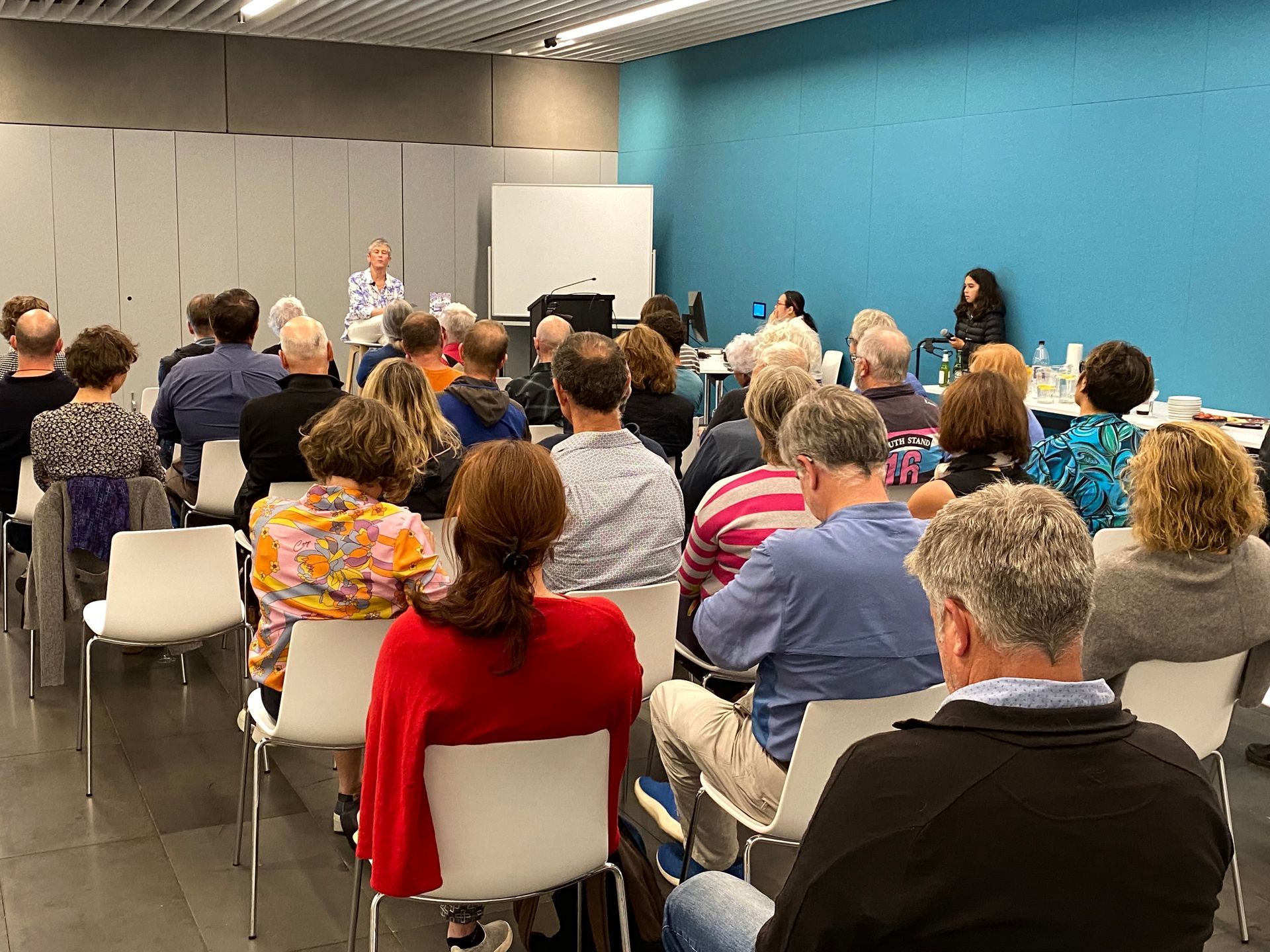
Broken is Beautiful launch at Turanga, Christchurch
My first novel Broken is Beautiful was launched this week in Christchurch and it was great to have lots of people come to the event. One of the book's themes is the importance of narrative in our lives and how our narratives are all about the people with whom we share our lives and stories.
Broken is Beautiful is set in COVID times, but relates back to the Canterbury Earthquakes. One of the memorable aspects of the Canterbury earthquakes was how the first post-earthquake catch-up would be all about "Where we you when ... ". Each person would recount where they were when the latest major earthquake happened and an hour, or more, would pass before one noticed the time. I felt these shared stories were important for helping us cope with the earthquakes, packaging up the experiences and making them contained and manageable. The earthquakes were also particularly effective at getting us out of our houses because our houses were not necessarily very nice to be in. It was easy to help others in the local community – checking on people's welfare, making buildings weathertight, shovelling liquefaction mud. And they provided a spur to get people into your broken house – "Look how munted my house is," people said. And, "Come round for dinner to eat all the food that's defrosting in my freezer."
One of the major contrasts between the civil emergencies of the Canterbury earthquakes and the COVID pandemic was our separation from each other in the pandemic; there was not the same opportunity to share stories. We were in our bubbles, within which we could share, but that was as far as we could go. There wasn't a sharing of "Where were you when Jacinda announced the lockdown?" or "Where we you when Jacinda announced the move to Level 3?" For the Level 3 move, you were almost certainly home, and quite likely listening to the 1pm Jacinda and Ashley show with your bubble mates, so perhaps there wasn't much to be said. However, I think it's important that we were physically constrained from sharing widely. While we can share stories electronically, there's nothing that replaces in-person contact for cementing relationships.
In the aftermath of the pandemic we are seeing societal divides opening up, particularly but not only, over vaccination. Divides are opening up in a way that no one remembers happening previously in New Zealand. There was the Springbok Tour in the 1980s, where friends and family divided over whether games of rugby should take place or we should boycott the games in protest against the apartheid regime in South Africa. However, as significant as that event was, the rifts that have opened up around the topic of vaccination feel much deeper and broader. Have these been rifts been driven by our isolation during the pandemic, isolation into bubbles, and isolation as a country? We have all been confined to our own scale of echo-chambers, many have become increasingly intolerant of people espousing different views, and some have become increasingly vocal and militant in expressing their views. There is unfettered use of language, in which it is clear social media plays a major role. There is no also doubt that nationalism is rising internationally, nominally driven by a call for national self-reliance, but nationalism takes a major step beyond self-reliance towards exclusion.
It's a strange thing that, in a world where communication is vastly easier than ever before in human history, we can become increasingly fragmented. It could be we simply can't cope with the scale of contact possible. 'Dunbars Number' of 150 has been used to explain the number of stable social relationships we can maintain based on the structure of our brains. This number is now considered incorrect, with a Swedish study suggesting numbers vary widely for different people – from 2 to 520. However, there is always going to be a maximum, on the basis that there is only so much time in your life you can spend communicating with other people. There's also the confounding factor of how strong the relationships are – relationships are individual.
It was great to get together with people from many periods of my life at my book launch – family who have known me literally forever, friends from high school, University, different times in my work, from living in Sumner, living in Castle Hill village. And, importantly, people who have become my friends through introductions from other friends – the ever-extending network one grows through life. Some friends I have seen recently, some sporadically, and some not for a very long time. I particularly enjoyed seeing people reconnecting because they came to the event and met other people they hadn't seen in a while, or a long time. People linked into the gathering electronically from other places as well; they couldn't physically meet us but our links were reinforced. I visualise all these links between me and my friends, and my friends and their friends, as a continuous spiderweb of connections extending out from Christchurch, out from New Zealand, across the globe, linking people in a finely-bound but silk-strong way. I believe, in an increasingly challenging world, there is nothing more important.
Get new content delivered
directly to your inbox.
Latest Posts